
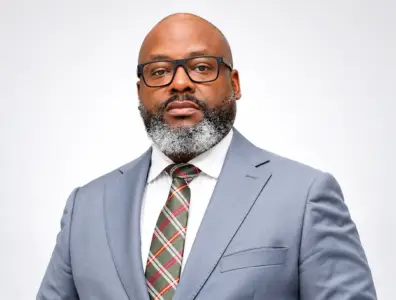
Jurelmo Lopes, CEO of Mainsol Energy, talks to The Energy Year about bringing the company’s focus back to its core oilfield business in Angola, early revenue opportunities in Mozambique and the significant long-term potential of Namibia. The discussion also considers Mainsol Energy’s role in the energy transition through sustainability, local content and support services for energy operators and major producers.
Mainsol Energy is a provider of oil and gas drilling support and well-intervention services, with related capabilities in logistics, training and temporary power.
- Mainsol Energy has stepped back from its planned liquid mud plant to concentrate capital and management attention on its core well-intervention business, expanding capabilities in coiled tubing, pressure pumping, slickline and stimulation.
- Mozambique offers the company nearer-term revenue opportunities from existing gas developments, while Namibia remains a longer-term strategic market whose potential scale could increase substantially as exploration moves towards development.
- Regional expansion is being built around local talent and a measured approach to growth, with Mainsol prioritising sustainable operations in Angola, Mozambique and Namibia while gradually developing services linked to gas, sustainability and the energy transition.
Why did Mainsol Energy decide to step back from its plan to launch a liquid mud plant?
We decided to step back from that plan because it was taking longer than expected, while rising competition in the domestic drilling-mud market meant that our investment would need to be significantly larger for us to be competitive. Rather than remain committed to a project that was consuming resources and attention, we chose to bring our focus back to the opportunities we risked leaving behind.
Our strategy is now once again fully centred on well intervention, which has always been our core service. We have a very strong partnership with Baker Hughes, and together we deliver coiled-tubing services to operators under one of our largest contracts. Coiled tubing in Angola has traditionally been dominated by the major service companies, but we have secured a strong position through our partnership. We are committed to this segment of the market and have two new coiled-tubing units on order. At the same time, we have become increasingly selective about the projects we pursue.
To compensate for the forgone revenue from the liquid-mud-plant project, we are developing other relevant equipment and services offering. To compensate for the forgone revenue from the liquid mud plant project, we are developing other relevant equipment and service offerings, including coiled tubing, pressure pumping, slickline and stimulation services, which are a natural fit within our portfolio. Our offering also includes plug-and-abandonment campaigns – such as the Sonangol campaign – inspections, turnaround support and temporary power solutions; Angola LNG, Etu are some other clients. We are consolidating our business in areas where we have the relevant expertise and where we see sustainable growth opportunities.
How are your expansion efforts progressing in Namibia and Mozambique?
We established our Namibian entity in 2024 and continue to maintain a presence there, although activity has been slower than anticipated. The country is focused on exploration and appraisal, and most work is being carried out by the larger international service providers, leaving limited room for regional competitors. We are patient, however, and remain committed to the market because we understand its long-term. Namibia’s potential scale is very significant.
Mozambique is a different story. We launched at the end of 2025, and today our operations are more organised there than in Namibia. We expect to begin providing pressure-pumping services by the end of 2026, with our relationships with Mainstream Service Providers, helping us to create opportunities.
What makes Mozambique attractive right now is that it already has producing gas projects, so demand exists for testing, commissioning and other services. The country provides us with valuable experience and early revenue opportunities. That said, whereas in Mozambique there may be approximately 70 wells, each of the seven or eight major operators in Namibia might drill as many as 40 wells over the next decade. Namibia’s potential scale is therefore very significant.
We are also assessing opportunities to supply relevant chemicals and other services to gas-production operations in Mozambique. These opportunities are aligned with our wider objective of supporting energy operators and major producers with reliable local services.
What role do local-content considerations play in Mainsol Energy’s international growth?
Local content is fundamentally about creating opportunities for the owners of the land. When entering Mozambique, we wanted to give our entire team, not just senior management, the opportunity to gain international exposure and experience. We therefore chose one of our youngest employees to travel to Mozambique to gain experience. He gradually became involved in branding, IT support and coordination between the Angolan and Mozambican teams. The outcome exceeded our expectations: he demonstrated enthusiasm, commitment and a strong sense of ownership. The same is true for a young, yet very experienced Mozambican Lawyer, whom we just appointed as HR Manager for Angola and Mozambique, in a short period of time her work is providing very positive results for the company.
Such results reinforce our belief that Angolan, Namibian and Mozambican talent should be given opportunities to grow. Discussions about local content often focus on regulations and percentages, but for us the more important question is whether young professionals are receiving genuine opportunities to develop. International operators do not always provide such opportunities, so we believe it is our responsibility to do so, provided that the required quality and service standards are maintained.
As we continue to expand across Africa, we want Mainsol Energy to become a platform where young professionals can gain exposure and experience to international projects, new technologies and different markets. Ultimately, that contributes not only to our growth as a company, but also to the development of the broader professional ecosystem.
Where do you see Mainsol Energy making the most progress in the next few years?
Our long-term vision is increasingly linked to the energy transition. Supporting oil and gas operations remain at the centre of our business today, but we understand that companies must prepare for future changes before they become unavoidable. Waiting until the market changes is not a strategy. The transition must be planned and implemented gradually.
We are studying how revenues generated from the oil and gas sector can be used to support new business opportunities linked to sustainability and the energy transition. Mineral supply chains, battery materials, renewable-energy technologies and optimisation solutions that can be adapted to African markets are all of great interest to us.
Our ambition is to support energy operators and major producers as they address changing market requirements. This includes providing relevant chemicals and services for gas-production operations, as well as developing capabilities in areas such as renewable energy, optimisation, logistics, training and temporary power. We see these activities as complementary to our existing expertise and as practical ways to contribute to a more sustainable energy system.
In terms of geographical expansion, we do not intend to immediately expand beyond Mozambique, Namibia and selected opportunities in East Africa. We have received requests in Kenya and Tanzania, but our priority is to ensure that our existing operations become self-sustaining and contribute robustly to the overall business of our group.
Mainsol Energy Mozambique headed by Stélia Manjate, our Head Executive in that country, participated in the Texas Africa Chamber of Commerce delegation trips to Washington, DC and Houston, including meetings involving Haliburton and ExxonMobil.
Source: theenergyyear.com